How Many Hours of Wedding Photography and Videography Do You Need?
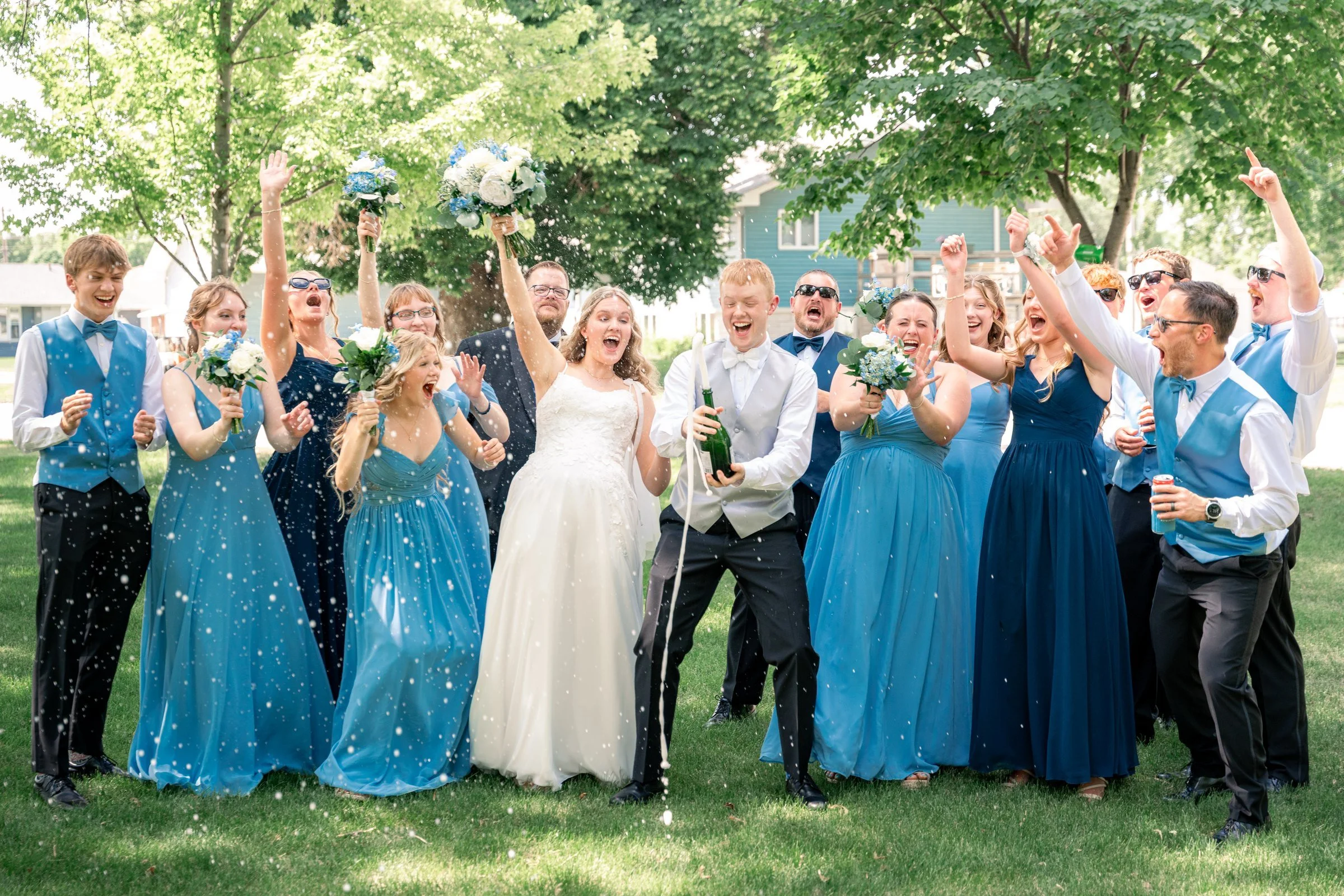
The people you want to remember help shape the coverage you need. Emily and Brady with their wedding party.
When a couple asks me how many hours they need, my first answer is usually, “Show us what your day looks like.”
Not because you need a finished timeline. Some couples reach out 18 months before their wedding. Others call two weeks before. Wherever you are in that process, we can start with the same questions: What do you want to remember? What do you want to see, hear and relive?
Then we work backward into the hours and the people needed to capture it.
The short answer: how much wedding coverage should you plan for?
- For photography covering much of the day, I often start the conversation around 8 to 12 hours. That can give us room for getting ready, portraits, the ceremony and important reception moments, depending on when everything happens.
- For video with morning conversations, interviews and a fuller reception story, I often explore 12 hours or more. That is not a minimum. A ceremony-focused film or a more compact day can need much less.
- For a small celebration or one important event, focused coverage may be exactly right. You do not need to buy a full wedding day when that is not what you want recorded.
These are starting points from our experience, not a rule for every wedding or a promise of what fits into a collection. Your locations, priorities, crew and budget matter more than picking a number that sounds normal.
If you are still sorting that out, our free wedding planning quiz can help you think through your priorities. It gives you a starting point, not a quote, and completing it does not send an inquiry.
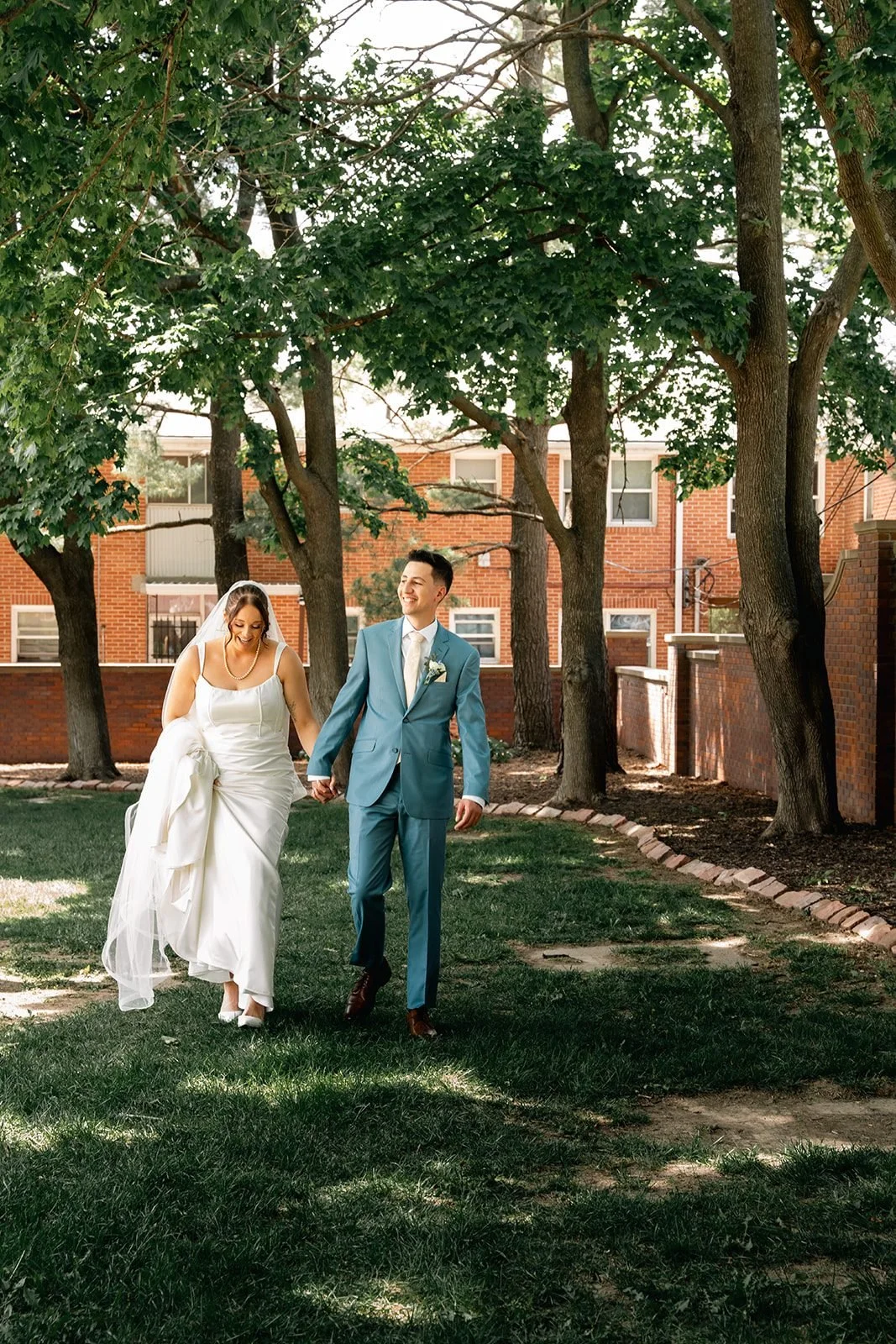
A little room between events matters. Grace and Alex photographed in Omaha.
Start with moments, then count the hours
Write down the parts you would be disappointed to miss. That might be your first look, family photographs, the ceremony, your dad’s toast, a few sunset portraits or a quiet conversation before everyone arrives.
Put those moments in order, even if the times are only rough. Then look at the window between the first thing you want covered and the last.
For example, 1 p.m. to 9 p.m. is an eight-hour window. It is not eight hours of scheduled events with travel added later. Driving, parking, setting up and waiting between events still happen within that window. Confirm how your team counts coverage and whether any split coverage is available.
For a ceremony film, we also need time before the ceremony to place cameras, check sound and fit microphones. The recording might be 30 minutes long, but showing up as you walk down the aisle is not the plan.
A day at one venue can work differently from a hotel morning, a church ceremony and a reception across town. Our Kylie and Chase wedding story at Venue 5 Twenty-Two and Bre and Brandon’s Lincoln wedding show two different ways a day can come together.
When shorter wedding coverage really does work
Abby and Daniel’s intimate wedding took place on a farm near Norfolk, Nebraska. The ceremony was tucked into a wooded setting, with close family and friends. Afterward, everyone spent time together at the farmhouse.
They were not planning a big dance floor or a long list of reception events. They wanted their ceremony preserved, and they wanted room to enjoy their people without cameras following every conversation.
With the arrival and setup planned carefully, we were also able to record their first look before the ceremony. That was possible for their particular schedule, not something to assume will fit into every ceremony-only plan.
Shorter coverage matched the celebration they wanted. That is an important distinction. More hours are useful when they protect something you care about, not simply because more is available.
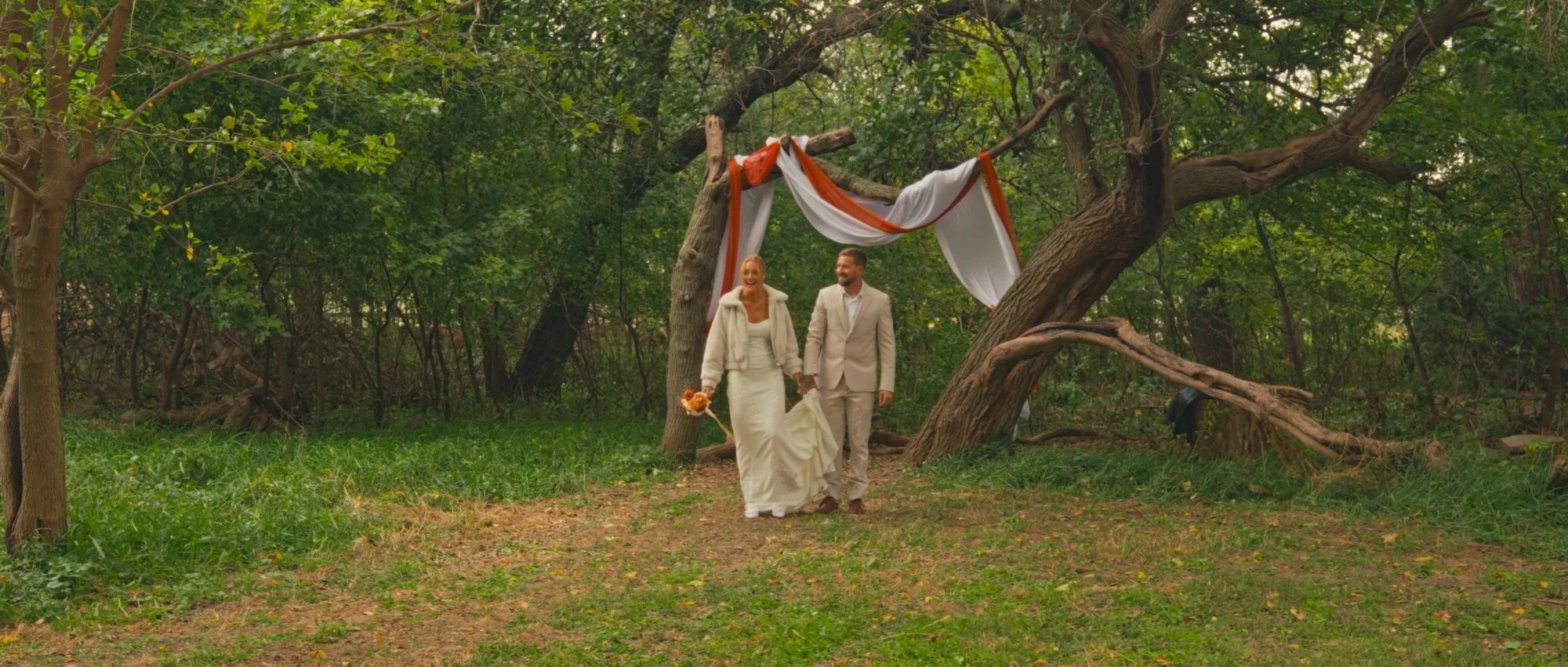
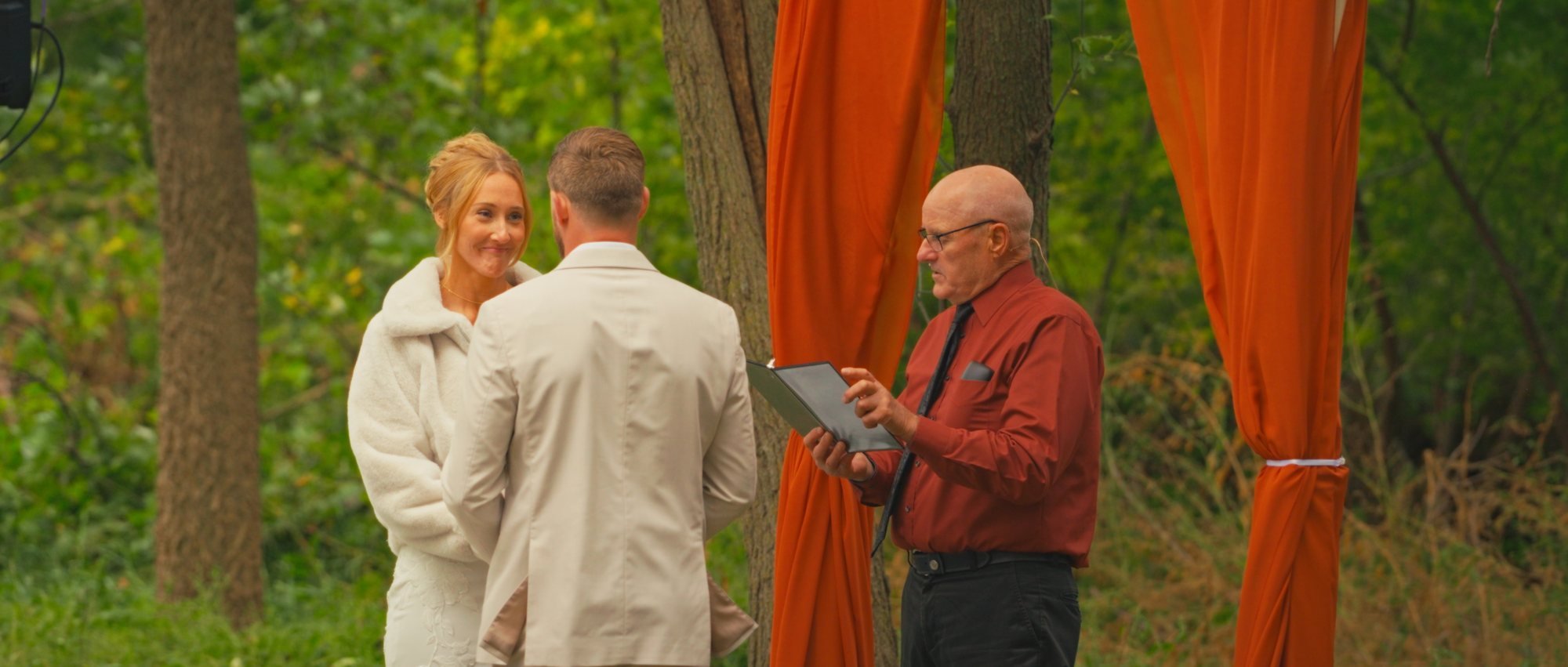
A focused ceremony story: Abby and Daniel near Norfolk. Film stills by Fox Brush Films.
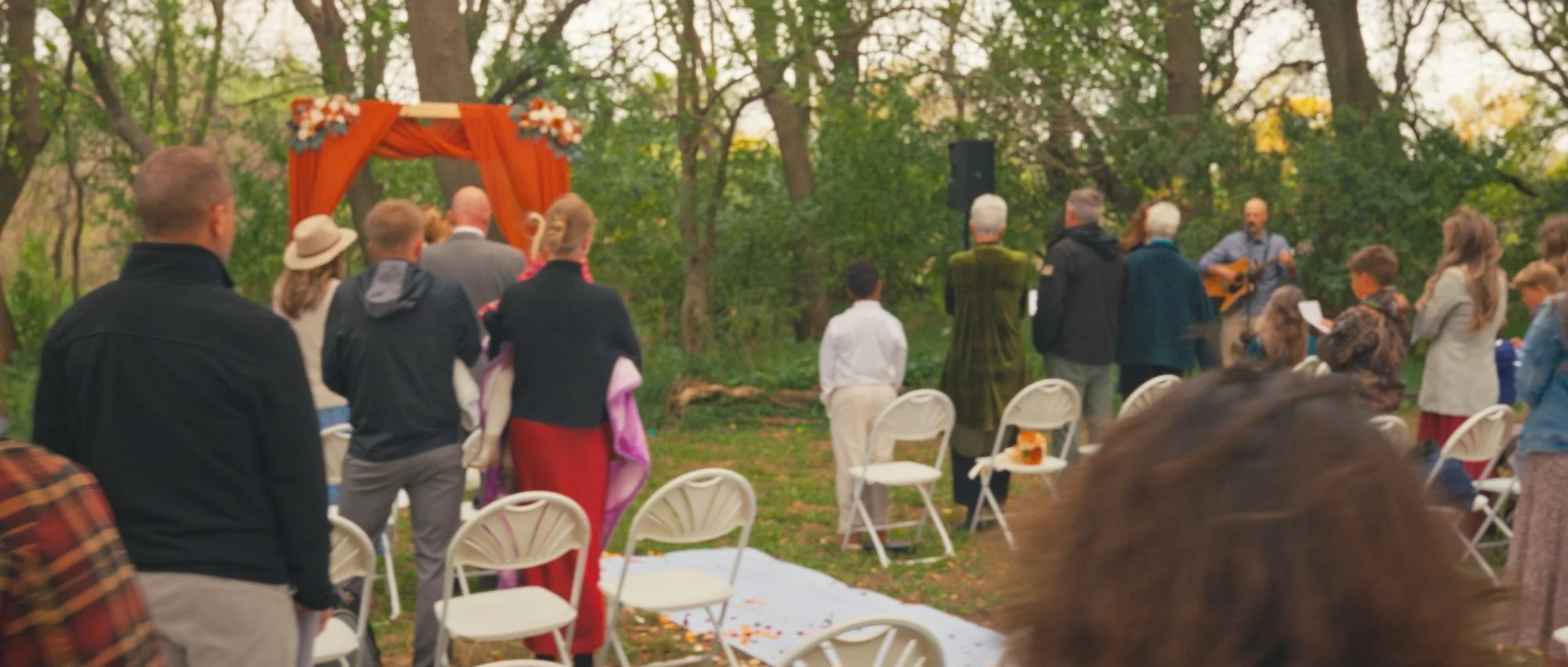
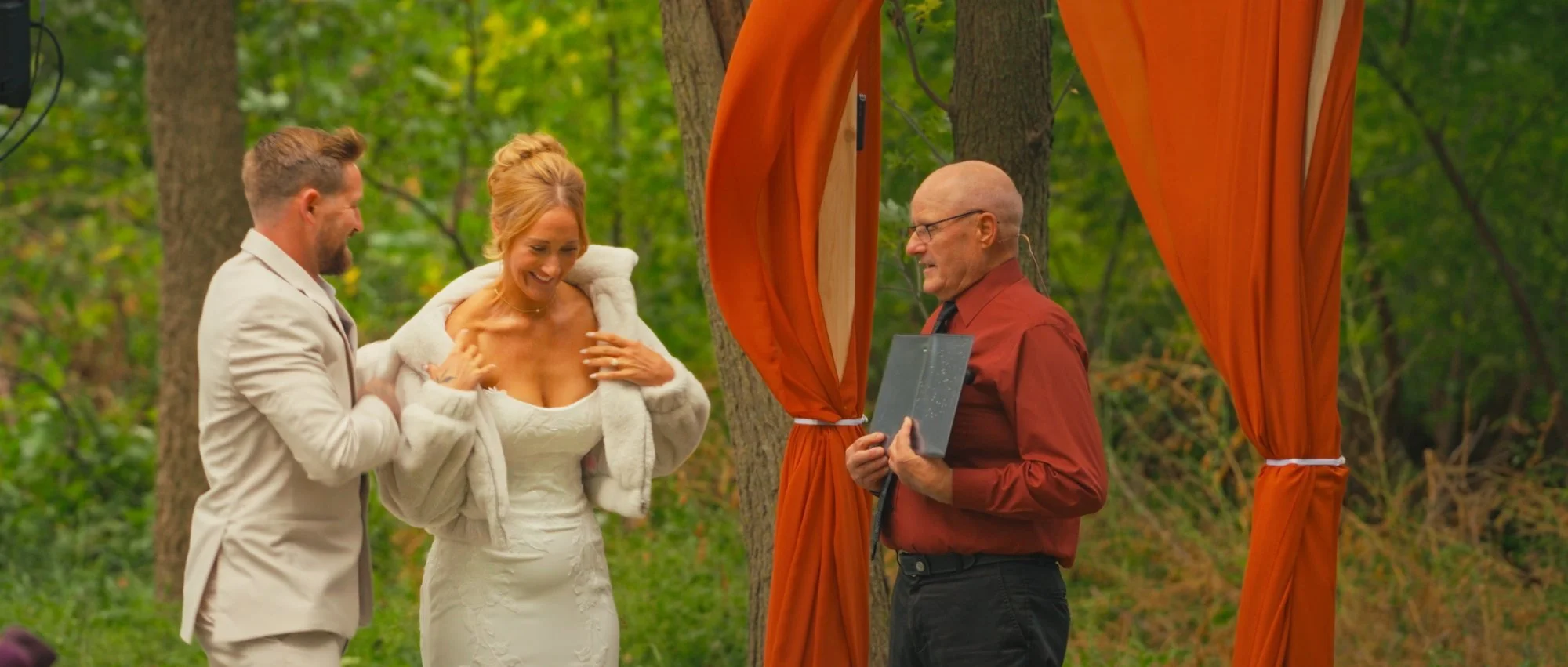
The people and the reactions around the ceremony. Abby and Daniel’s film.
When a longer day and a bigger crew make sense
Bre and Brandon wanted a very different kind of record of their wedding. We covered roughly 16 hours, with a four-person video crew supporting a day that included early time together, getting ready, their ceremony, interviews and the reception.
We were also making a same-day surprise edit to show at the reception. Part of the team needed to keep filming while another part worked on the edit and playback. That is a different job from having one filmmaker cover a ceremony and create a highlight film afterward.
The extra hours protected the beginning and end of their story. The additional people helped with things happening at the same time. More hours and more crew solve different problems.
You can watch Bre and Brandon’s wedding films and read about the same-day edit. Their plan made sense for what they wanted. It is not the amount of coverage every couple needs.
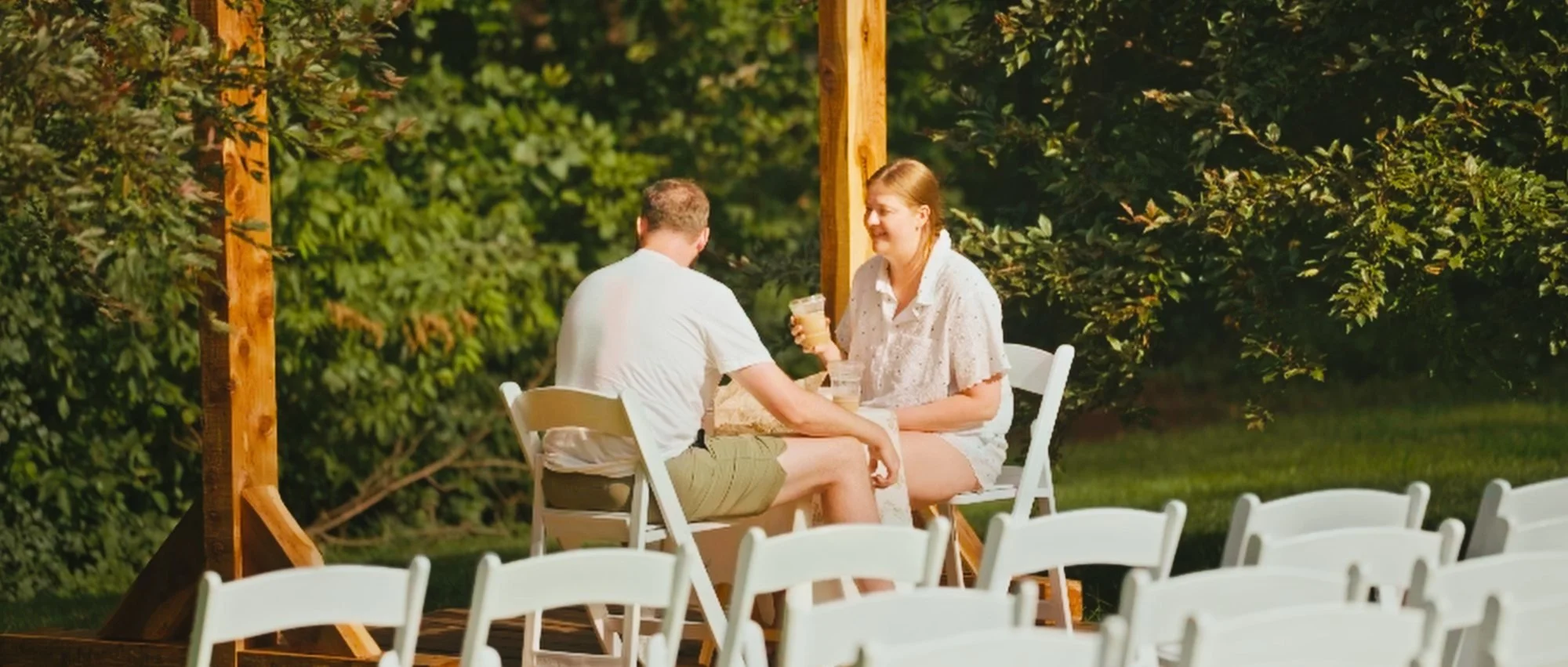
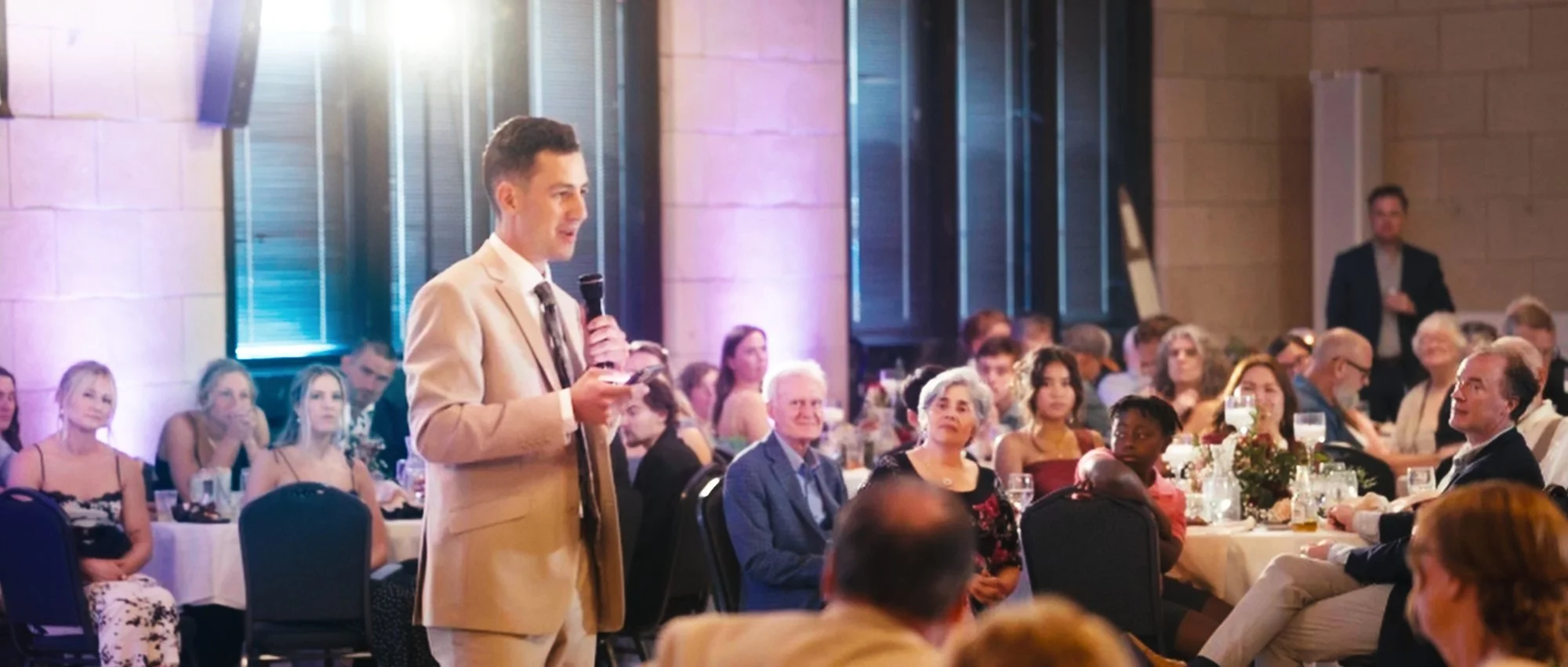
Early time together and reception toasts were part of Bre and Brandon’s longer coverage. Film stills, not photographs.
Three things that take longer than couples expect
1. Family photos
Family photographs are one of the quickest places for a timeline to grow. I often allow roughly 30 to 60 minutes as a starting point, but the number of combinations, mobility needs and whether everyone is nearby can change that considerably.
“A few family photos” can become both families, grandparents, siblings, spouses, cousins and several different versions of each group. None of those requests are wrong. We just need to know about them.
List every combination you want, with names and relationships. Choose someone who knows the family to help gather the next group. That keeps you from spending your wedding day calling across a room for people.
A second photographer or another agreed helper can keep people ready while the lead photographer works. For a larger family or a tight schedule, that can make a real difference. A small, well-organized list may not need the same setup.
Our free wedding timeline and photo-list template gives you somewhere to start. It opens as a view-only Google Doc. Sign in and choose File → Make a copy to edit your own version.
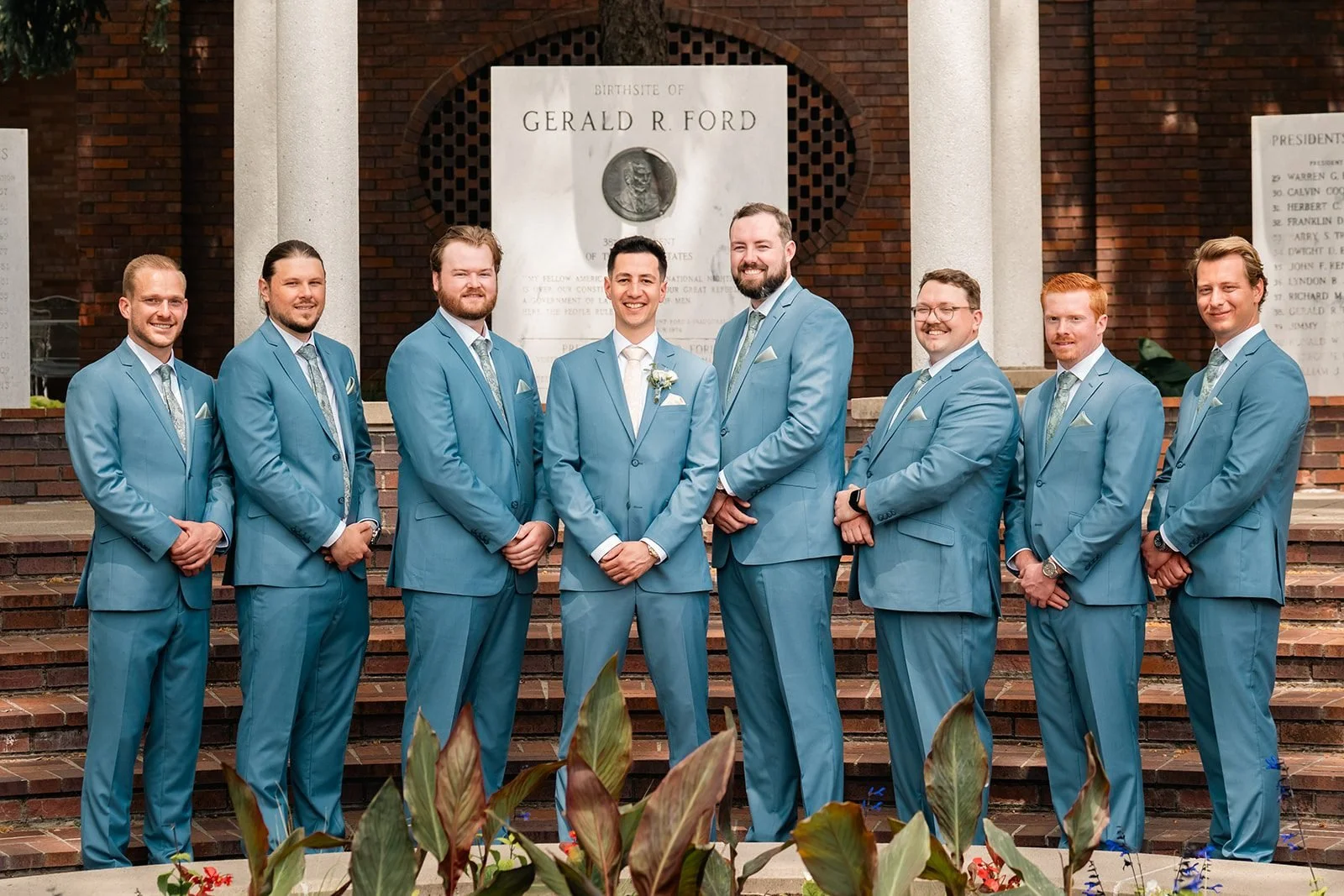
A planned group photograph works best when everybody knows where to be.
2. The last part of getting ready
Hair and makeup finishing does not always mean you are ready to walk out the door. There are touch-ups, getting dressed, finding shoes and a few people who want a moment with you.
Leave room to get comfortable in what you are wearing. If a parent is helping with the dress or you want a first look with your wedding party, put that time in the plan instead of hoping it happens between everything else.
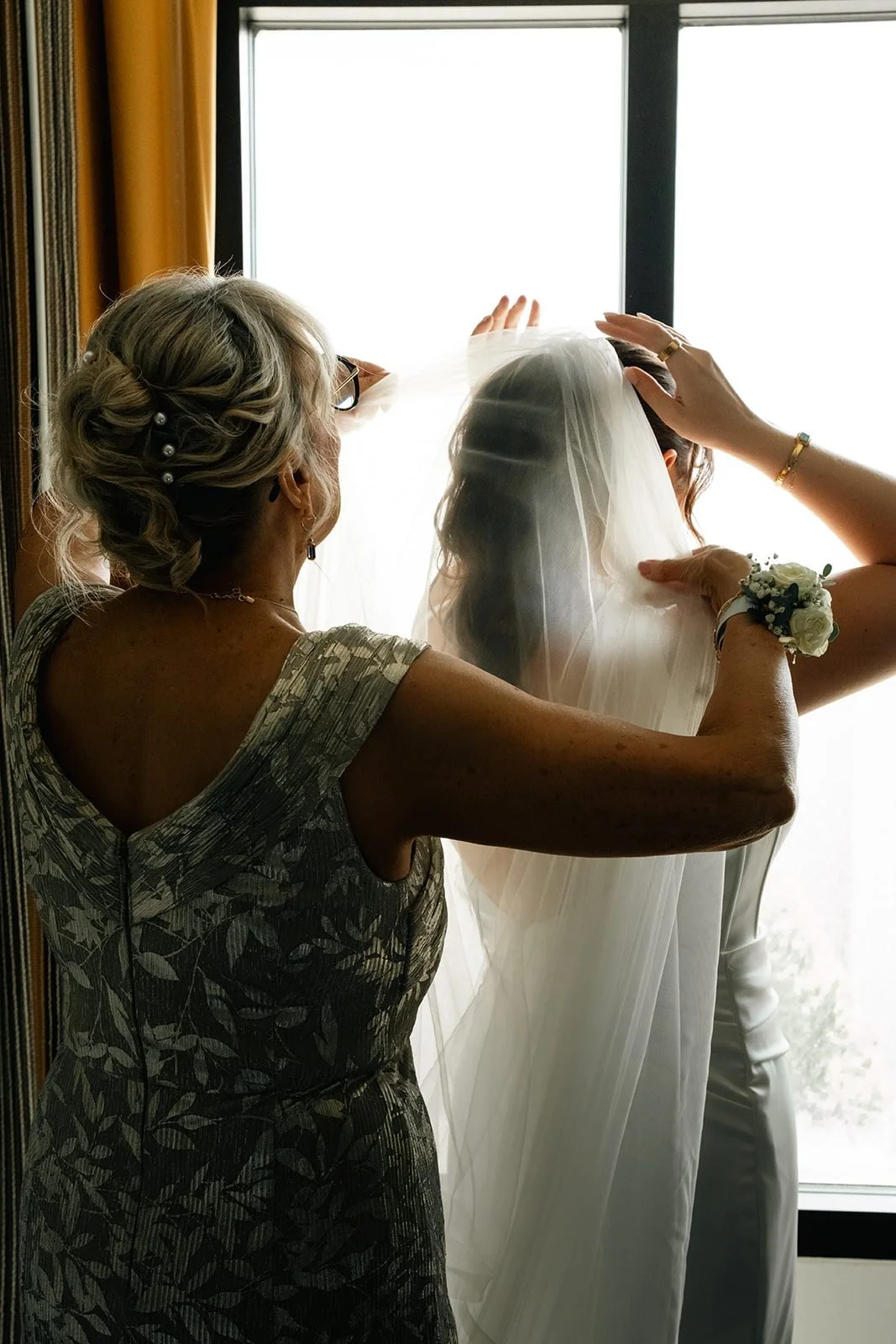
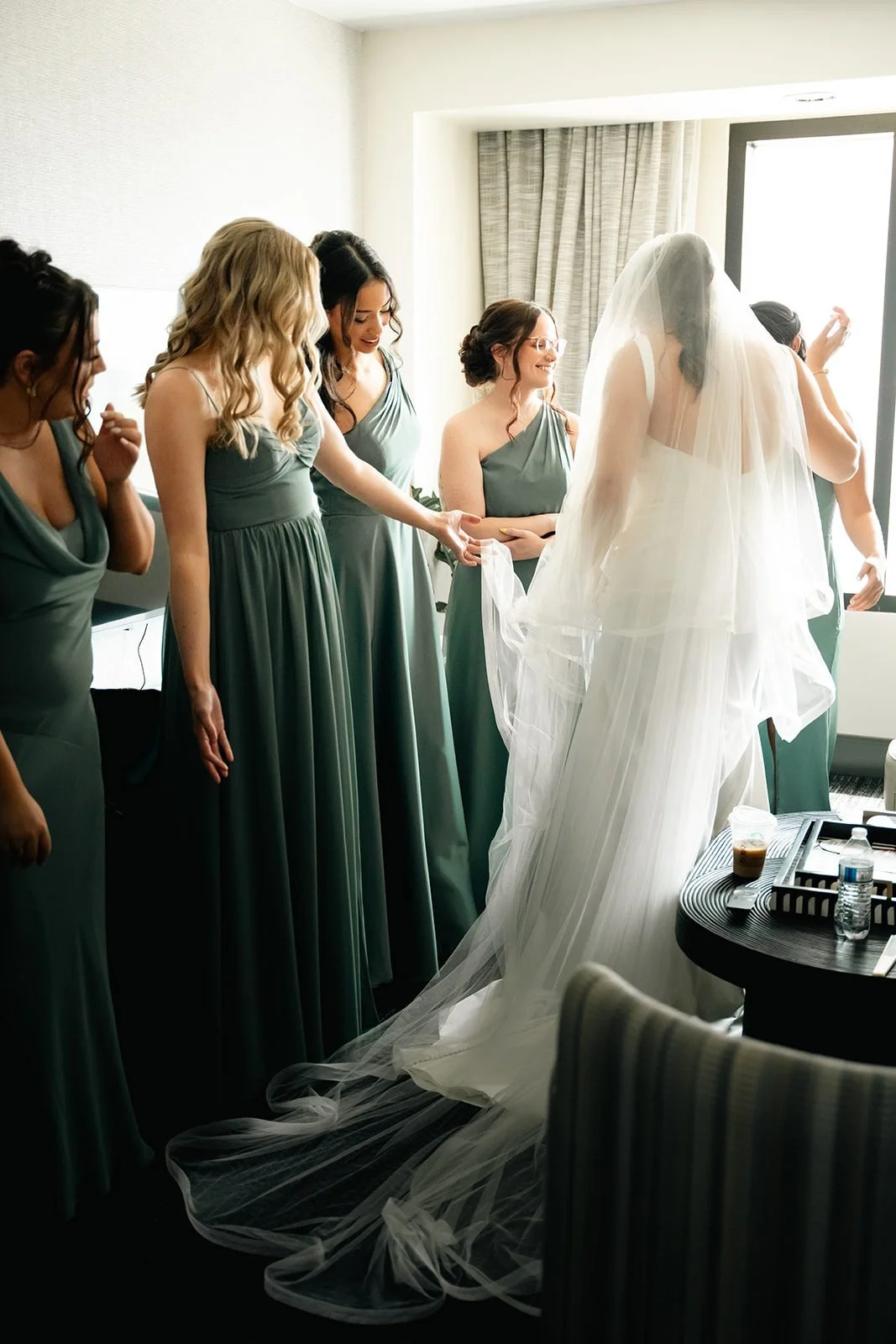
Getting dressed and the first reactions deserve time in the plan. Grace and Alex’s Hilton Omaha morning.
3. Dinner, toasts and the move into dancing
I understand wanting to fit every important reception moment before coverage ends. But stacking dinner, speeches and dances too tightly can make the evening feel like a checklist.
The point is that you get to enjoy it. Talk with your venue, catering team, DJ and coverage team about a realistic order. You should not have to rush through a conversation because everyone is watching the photographer’s departure time.
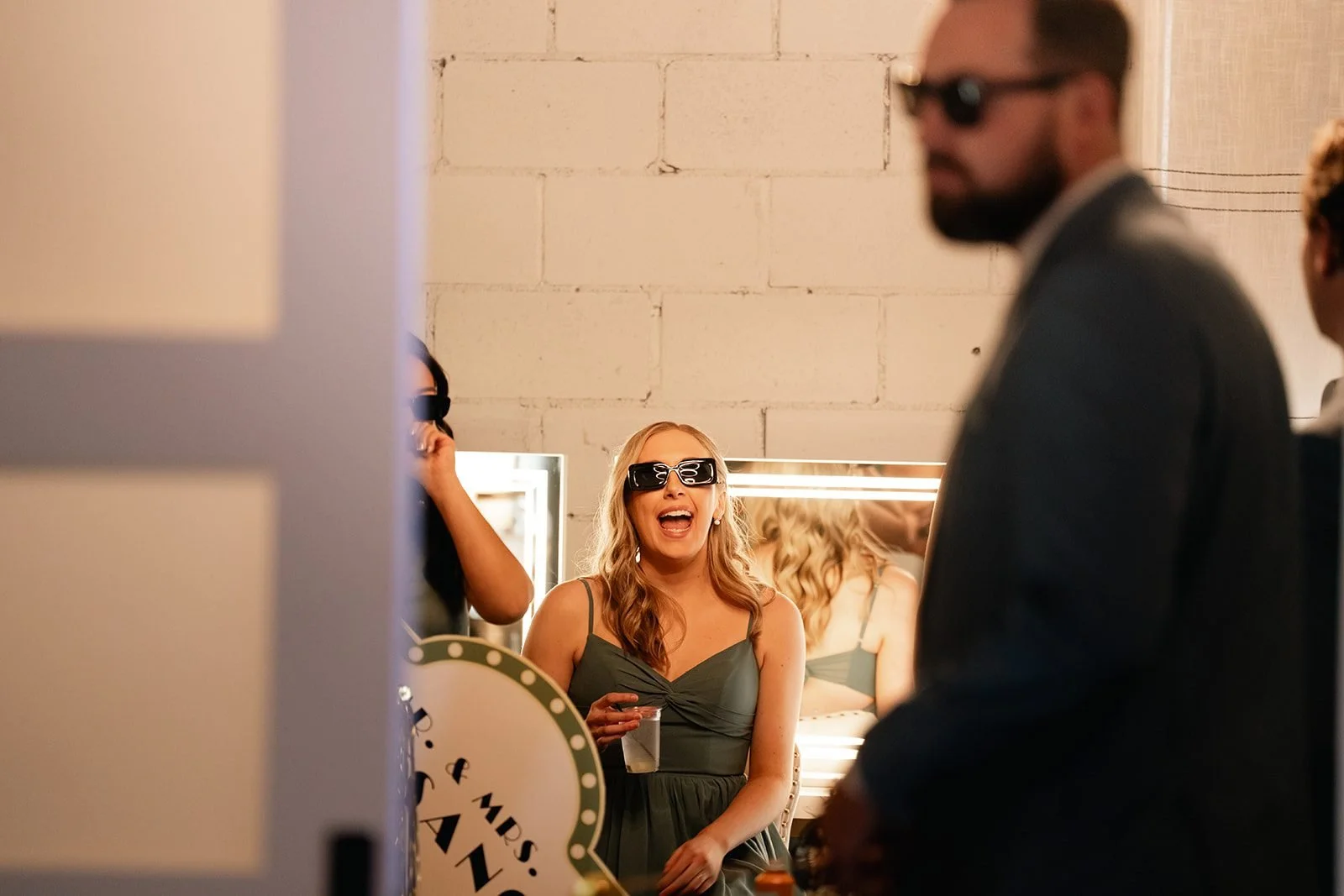
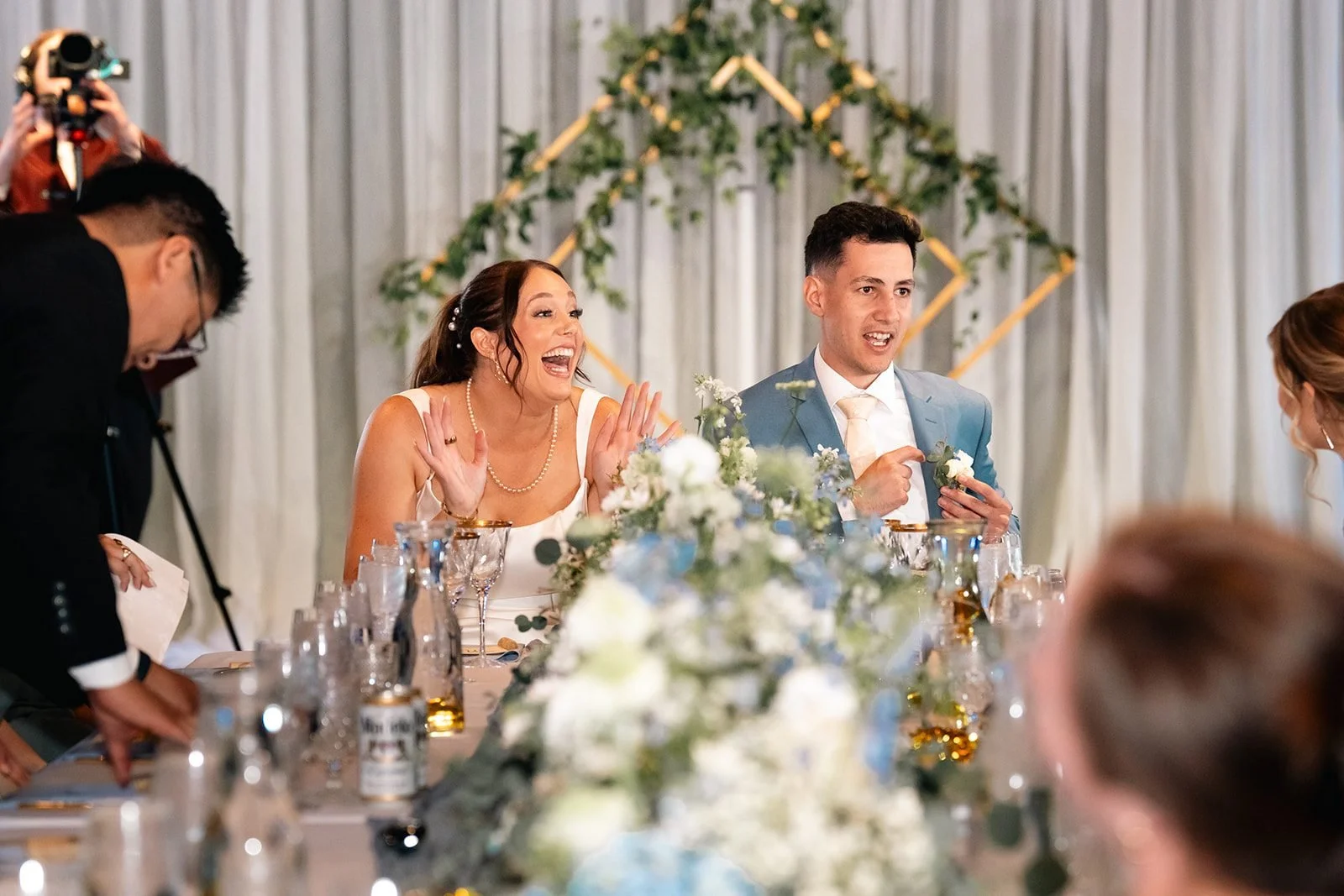
The toast and the reaction. Grace and Alex’s Diamond Room reception.
Do you need more hours or a second photographer?
If the two of you are getting ready in separate places at the same time, extending one photographer’s day does not put them in both rooms. If everything happens in sequence but your sunset portraits are much later, more time may be the better answer.
We have also had days when family-photo requests grew and people were hard to find. Our photo and video team could coordinate over headsets and help gather people, rather than leave the photographer trying to do everything alone.
Ask what the additional person will actually do, and for how long. Compare that with extending the lead photographer’s coverage. Neither option is automatically cheaper or better. Our wedding photography collections explain the team and hours included, with custom options for days that need something different.
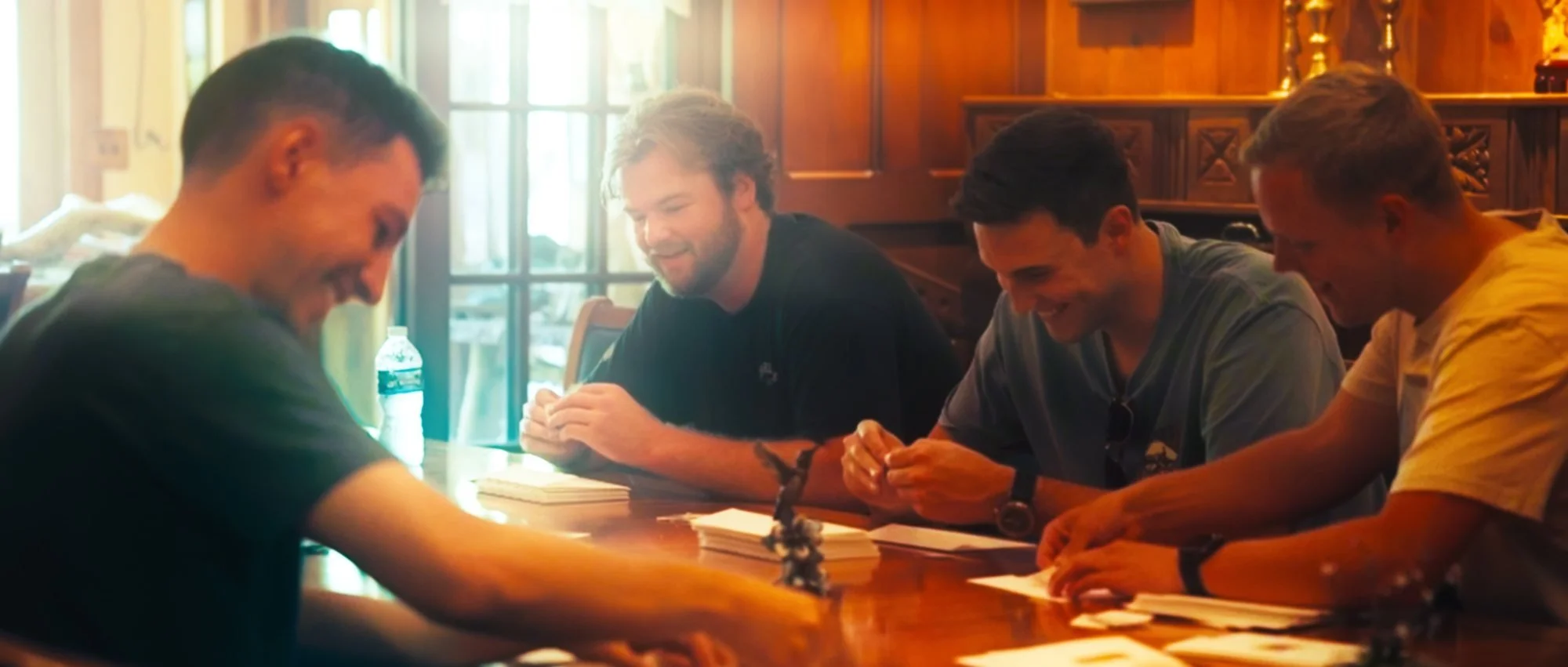
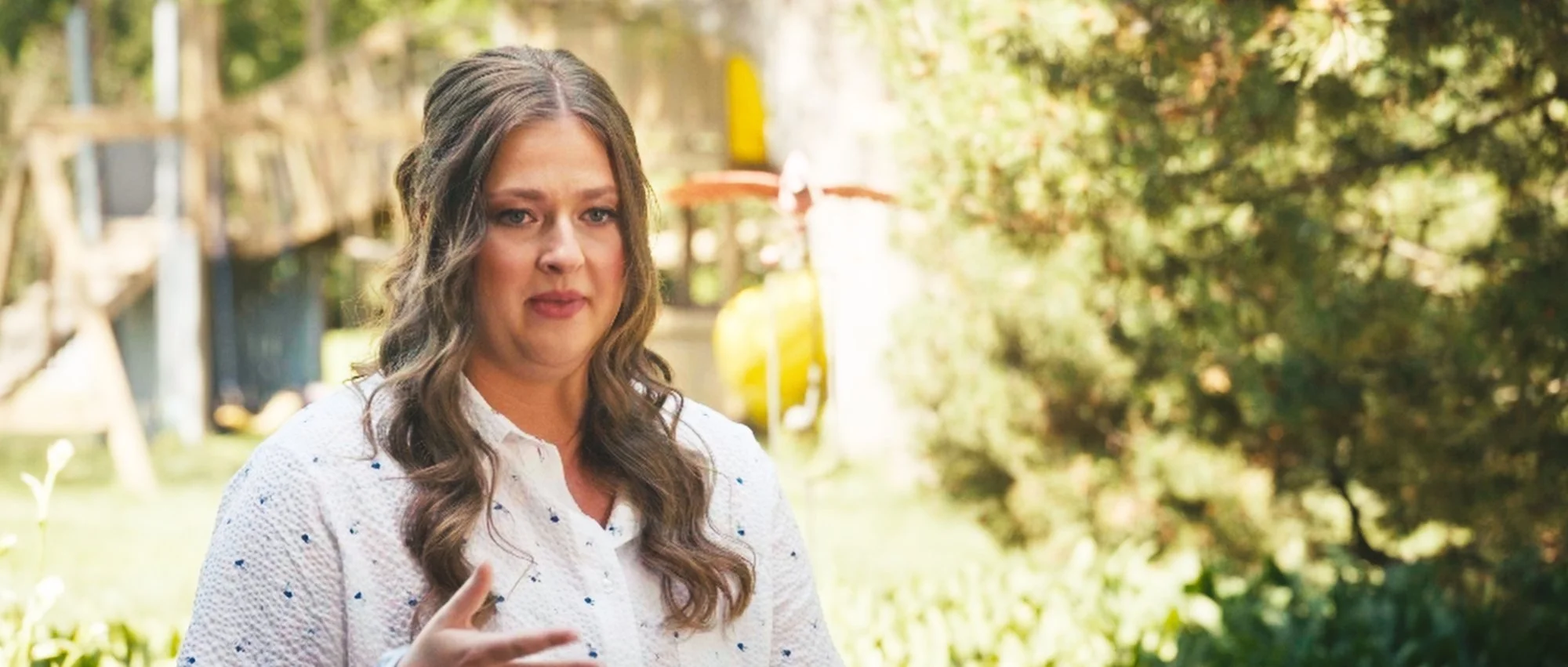
Conversations and interviews tell another part of the day. Film stills from Bre and Brandon’s wedding.
With a firm budget, protect what matters first
If you ask what I would preserve first, it is that first real moment together. Maybe you see each other before the ceremony. Maybe it happens afterward, when you finally get a second to say, “Oh my gosh, we’re married.”
Give that moment some space. Ask family and friends to let you have it. You do not have to hurry through it just because there is a camera nearby.
For me, video can bottle up something very specific there: the nerves, the laugh, the way you talk to your best friend. With your permission, we can use microphones and step back so the moment has room to happen.
If the budget is firm, we can look at shortening repetitive early preparation or some of the open dancing after your important reception events. Unless someone has promised a spectacular backflip, you may not need hours of the same dance floor.
That changes if night portraits, guest interviews or a planned exit really matter to you. Keep the moments you care about and be honest about what can go. If a standard collection does not fit, ask about focused or custom coverage. Spending beyond your limit is not the goal.
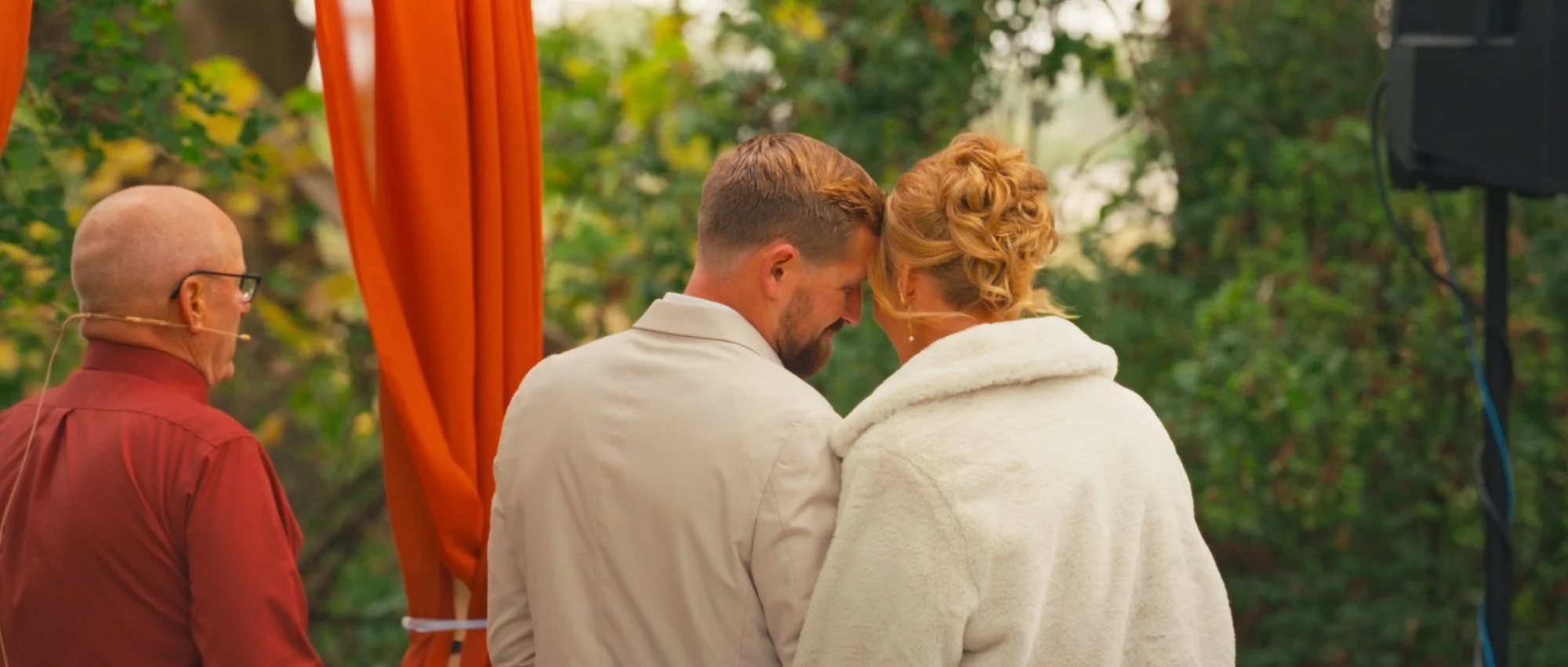
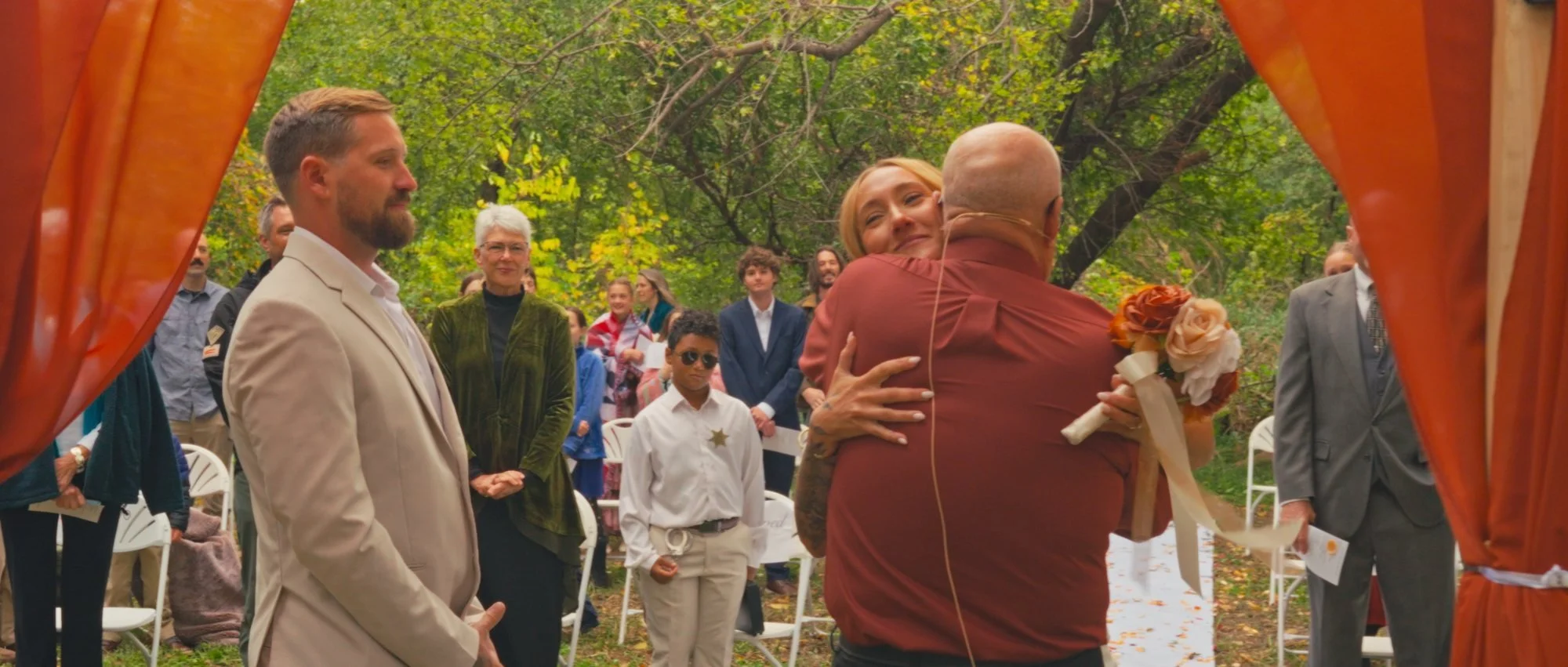
Keep the moments that matter most to you. Abby and Daniel’s ceremony film.
Should photo and video arrive and leave at the same time?
Not necessarily. I often recommend an earlier video arrival when a couple wants morning interviews, conversations and those nerves before they see each other. Your partner may never see that side of your morning until they watch the film.
Photography might begin closer to the final getting-ready moments, portraits and details. Or it might start early too, if those photographs are important to you.
The same applies at night. Video may stay for guest interviews and the reception atmosphere. Photography may stay for sunset portraits, a lively dance floor or an exit. Neither has to follow the other’s schedule just because you booked both.
Write down a separate arrival and departure time for each service. Then check those windows together so the important moments are covered and everyone knows the plan.
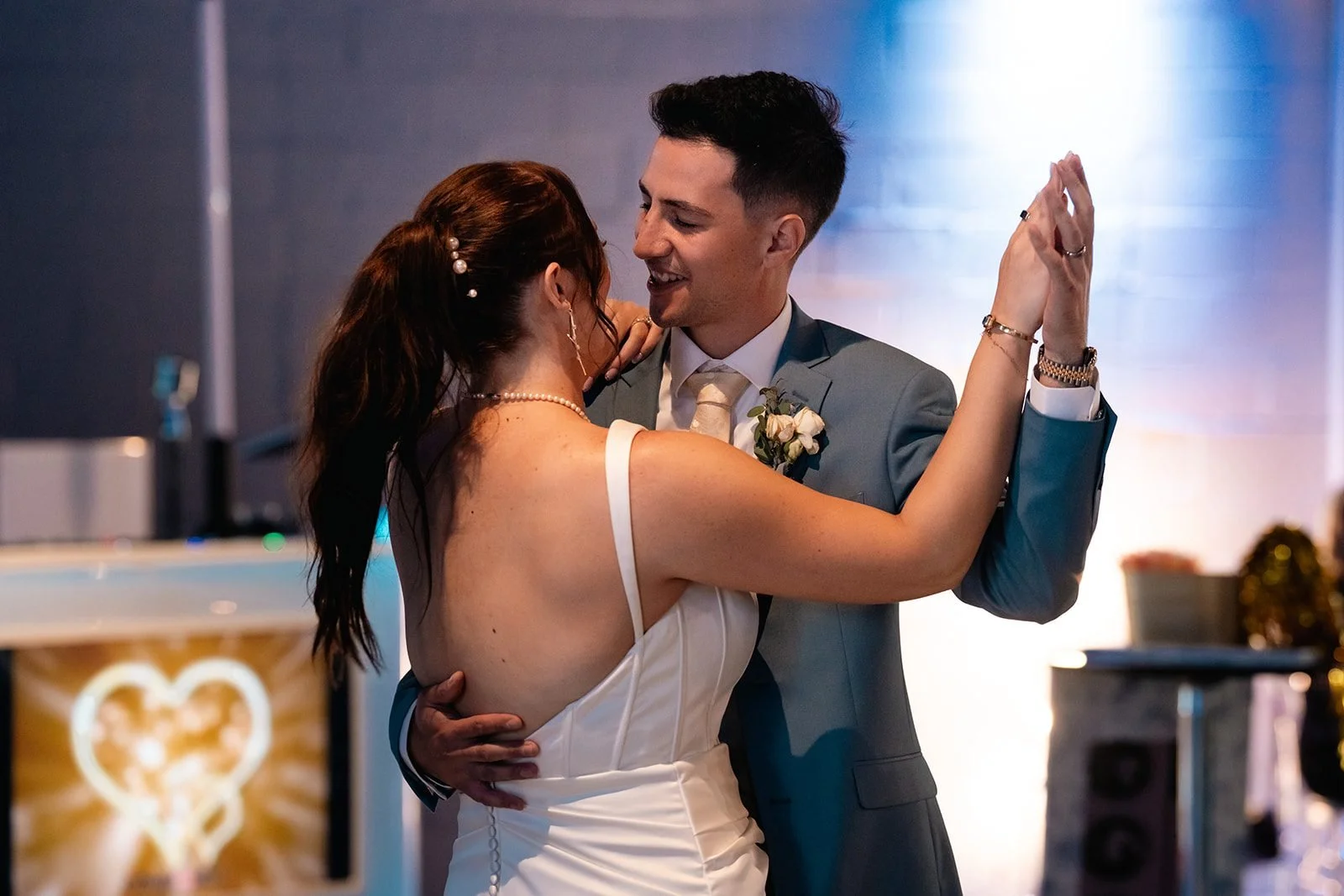
Your last important moment may be earlier or later than somebody else’s. Grace and Alex’s first dance.
Can you add a full ceremony film after the wedding?
Sometimes, but have that conversation before the day. A filmmaker capturing clips for a highlight film may not be recording the entire ceremony continuously, with the cameras and sound needed for a separate edit.
Ask whether the full event will be recorded, what audio is captured, how long the footage is retained and what a later edit would cost. Do not assume that being there means every possible finished film will be available later.
Our guide to wedding ceremony video, audio and cameras explains those questions. You can also compare the finished films included in our wedding film collections. Coverage hours and the length of your highlight film are two different things.
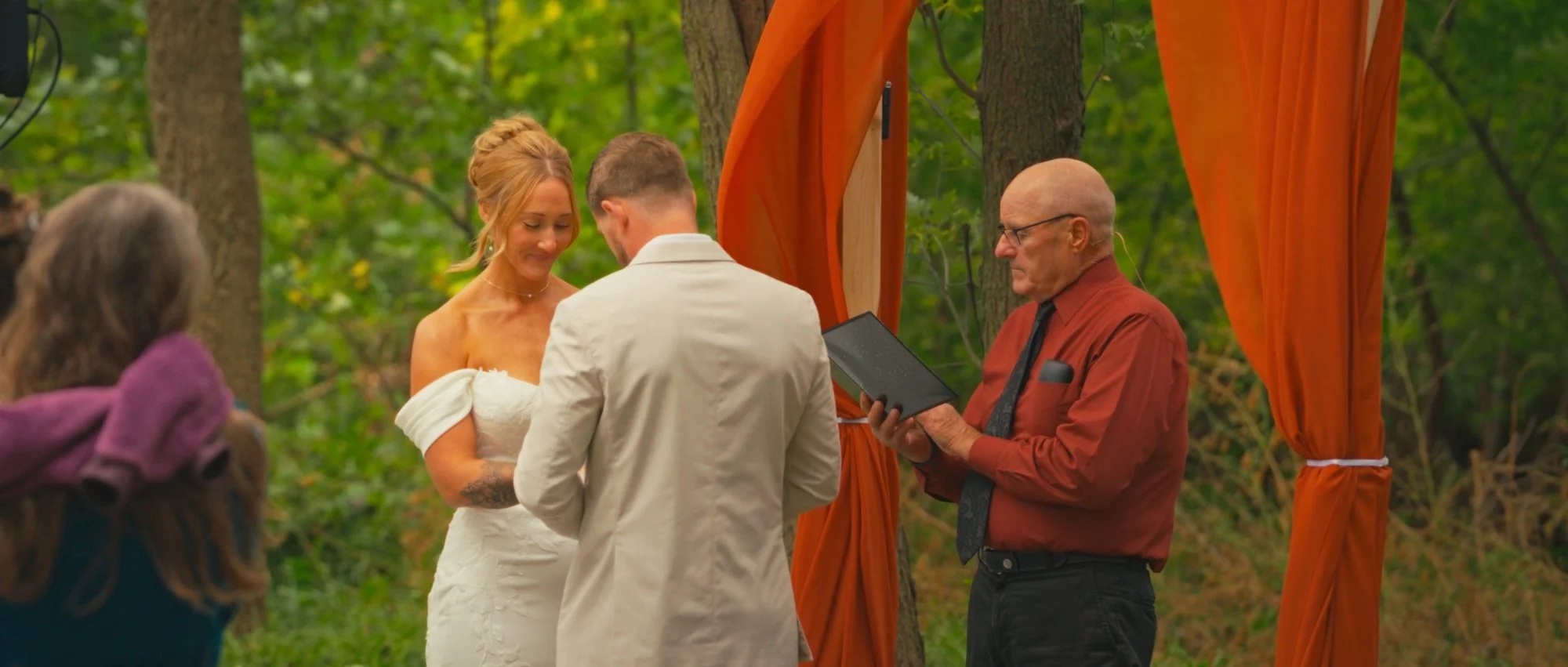
Ceremony coverage needs a plan before the day. Film still from Abby and Daniel’s wedding.
You do not need a perfect timeline to start
Bring us what you know: your date, locations, the people who matter, the moments you want covered and the budget you are working within. If some of that is still undecided, that is okay.
Our photo and film team is based in Wausa and works with couples in Omaha, Lincoln, Norfolk and across Nebraska. We can help you compare the hours, people and finished work before you decide what fits.
Tell us about your wedding and let’s talk through the coverage →
The moments I keep coming back to are often pretty simple. Someone cracking a joke. A first look that nobody rushed. People seeing each other after a long time apart.
Those are the things I want you to be able to come back to. Let’s make a plan that gives them room.